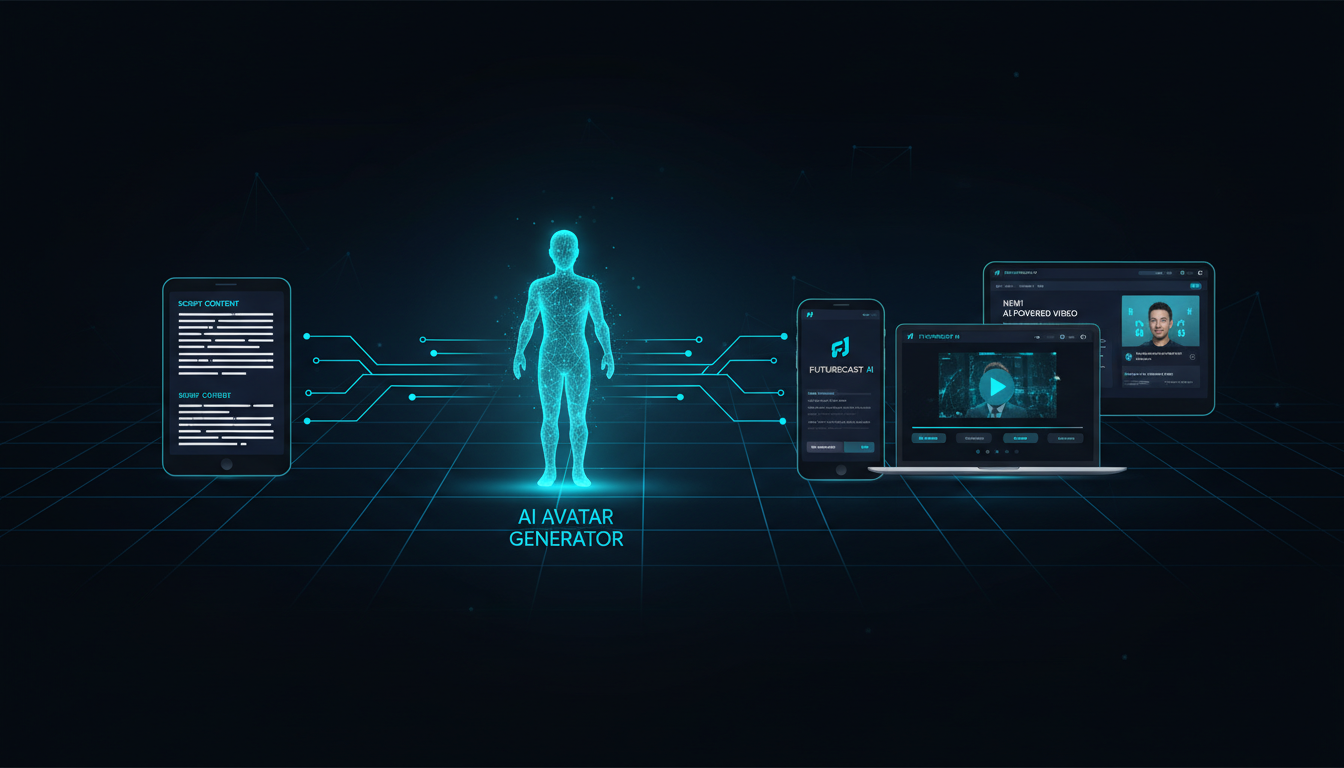
AI-Generated Video Without Recording
What Happens When Video Content No Longer Requires Recording
For most of the internet era, creating video has meant planning a shoot, setting up equipment, recording people or products, and then editing the footage. Artificial intelligence is changing that assumption. Increasingly, businesses can generate video without recording anything at all.
AI systems can already create talking-head presenters from text, synthesize voices that sound natural, and assemble scenes, transitions, and captions automatically. As these tools improve, the idea of recording may become optional, especially for many types of marketing and operational content.
From Cameras to Prompts: How AI-Generated Video Works
When video no longer requires real-world recording, the core input stops being footage and becomes structured information: scripts, prompts, data, and brand rules. Modern AI video platforms can generate a virtual presenter or avatar, synthesize a matching voiceover in multiple languages, assemble scenes with on-screen text or simple graphics, and automatically handle timing, cuts, and basic animations.
Instead of asking "Who will be on camera?" the main questions become "What needs to be said?" and "How should it look and feel?" Video becomes an output format generated from existing knowledge and content, rather than a separate production event.
How This Changes Marketing and Communication Workflows
1. Script and message become the main production assets
In a traditional shoot, many details are locked in on the day of recording. With AI-generated video, the master is often the script and configuration rather than the footage. Updates become a matter of editing text and regenerating video, and different versions can be produced for different audiences without re-recording.
2. Content libraries become multi-format, not single-use
When you remove the camera constraint, one piece of core content can be expressed in many ways. A service business might maintain a central knowledge base of policies, processes, and FAQs. From that base, AI systems can generate short explainer videos for website pages, onboarding walkthroughs for new clients, internal training clips for staff, and localized versions for different regions.
3. Feedback loops can be faster and more data-driven
Because AI-generated video can be updated quickly, businesses can iterate based on performance and customer feedback. If analytics show viewers drop off during a certain section, the script can be tightened and regenerated. If a compliance statement changes, a new version can be generated without scheduling new filming.
New Possibilities When People Are Optional On Camera
Reducing the bottleneck of who will appear on camera
Many service businesses delay or avoid video because key experts are camera-shy, busy, or spread across locations. When AI can represent the message without requiring an individual to be filmed, that bottleneck can ease. This could support standardized explainer videos that do not depend on one specific staff member, onboarding and training content that scales even as teams change, and consistent brand presence across markets and languages.
Personalization without individual recording sessions
When the talent and visuals are generated, personalization becomes much easier to scale. Systems can adjust wording, examples, and even visual elements based on data such as customer segment, location, or stage of the buyer journey — different intros for homeowners versus commercial clients, location-specific references, or alternative explanations for different audiences.
Where Recording Still Matters
Even in a world of AI-generated video, there are areas where genuine recording remains important or preferable: authenticity and trust signals for founder messaging or customer testimonials, and complex, physical, or highly specific demonstrations where recording the actual process is more accurate or reassuring to viewers.
Operational Considerations for AI-Generated Video
As video shifts from recorded media to generated output, new operational questions arise: data, privacy, and consent policies around synthetic avatars; quality control and brand consistency standards; and maintaining a content inventory so outdated videos can be updated or retired.
Strategic Shifts: From One-Off Campaigns to Ongoing Systems
When video is no longer limited by recording capacity, it becomes less of a special event and more of a continuous capability. AI-generated video can become another interface to your knowledge base, supporting self-serve explanations that reduce repetitive questions, consistent onboarding experiences across locations, and faster rollout of updated information when services or policies change.
If you would like to explore how AI, automation, and modern digital infrastructure could fit into your own marketing and communication systems, you can learn more or start a conversation with the team at Hyppo Advertising Inc. by visiting hyppohq.ai/contact.