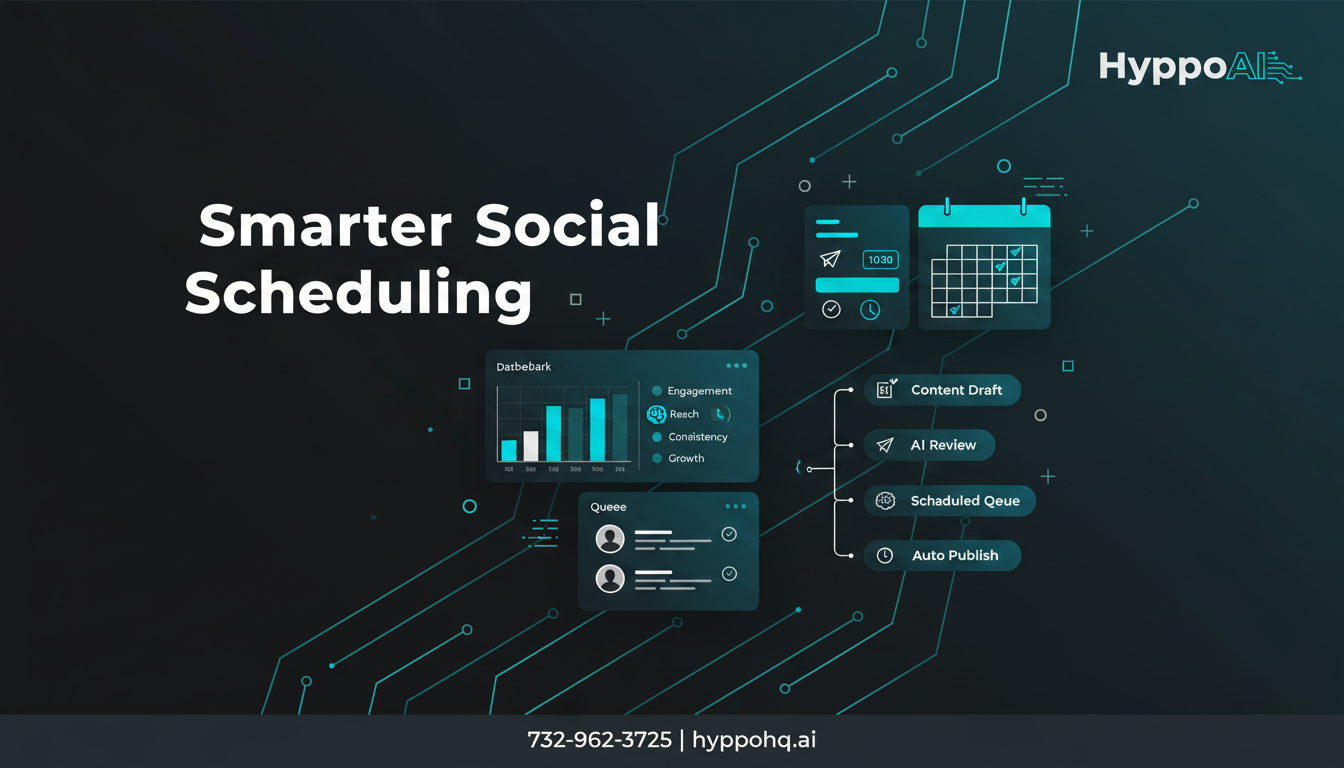
Automation for consistent posting: smarter social scheduling
Consistency is one of the biggest drivers of social media growth. When your audience sees you regularly, they remember your brand, engage more often, and are more likely to trust what you offer.
The problem is simple: most small and midsize businesses do not struggle with ideas alone. They struggle with time, follow-through, and repeatable execution. That is where automation becomes valuable.
Automation helps maintain consistent posting by turning social media from a daily scramble into a structured system. Instead of relying on memory or last-minute effort, businesses can build a reliable publishing process that keeps content moving.
Why consistent posting matters
Posting consistently is not about flooding feeds. It is about showing up often enough that your audience recognizes your brand and expects to hear from you.
When posting is irregular, a few things usually happen:
- Engagement becomes unpredictable
- Content quality drops under pressure
- Brand messaging feels disconnected
- Leads and opportunities are missed
- Teams waste time deciding what to post every day
A consistent schedule creates rhythm. It tells platforms that your account is active and gives your audience more chances to interact with your content.
For SMBs, consistency also supports credibility. If a business looks inactive online, potential customers may assume it is disorganized, unavailable, or behind the times.
How automation helps maintain consistent posting
Automation does not replace strategy. It supports execution.
Used correctly, automation helps businesses plan, organize, and publish content with less manual effort. That means fewer missed days and a more dependable presence online.
1. It removes the need to post manually every day
Manual posting creates friction. Someone has to remember the schedule, open each platform, write or paste the caption, attach media, and publish at the right time.
That process may sound manageable, but it breaks down quickly when teams get busy.
Automation tools let you schedule content in advance so posts go live automatically. Instead of thinking about social media every day, you can batch the work once and let the system handle delivery.
This reduces:
- Missed posting windows
- Last-minute content decisions
- Inconsistent timing
- Dependence on one team member being available
2. It supports content batching
One of the best ways to stay consistent is to create content in batches. Automation makes batching practical.
Rather than creating one post at a time, businesses can plan a week or month of content in one session. Captions, visuals, and publishing dates can be loaded into a scheduler and reviewed before anything goes live.
Batching helps teams:
- Stay ahead of deadlines
- Keep messaging aligned
- Reduce context switching
- Make better use of creative time
This is especially useful for SMBs that do not have a full-time social media team.
3. It creates a repeatable posting system
Consistency improves when posting becomes a system instead of a habit.
Automation allows businesses to build workflows around recurring content types, such as:
- Educational posts
- Promotions and offers
- Customer testimonials
- Behind-the-scenes updates
- FAQs
- Seasonal campaigns
Once those categories are defined, it becomes easier to map out a posting calendar and automate the schedule. That structure reduces guesswork and keeps content balanced.
The operational benefits of automation
Automation is not only a marketing convenience. It is an operational advantage.
For growing businesses, every repeated task should be reviewed through one question: can this be systemized?
Social posting is a strong candidate because it is recurring, time-sensitive, and easy to standardize.
Better time management
When social media is automated, teams spend less time on publishing logistics and more time on strategy, creative direction, and audience engagement.
Instead of using energy to remember what needs to go out today, they can focus on improving what gets posted.
More reliable brand presence
A reliable publishing cadence makes a brand feel active and intentional. That matters whether you are trying to build awareness, generate leads, or stay top of mind with current customers.
Automation helps ensure your channels stay active even during busy periods, holidays, or internal transitions.
Easier collaboration
When content is scheduled in advance, it is easier for teams to review, approve, and adjust posts before they go live.
That can reduce errors and improve alignment across marketing, sales, and leadership.
What automation should handle and what humans should still own
The best results come from using automation for structure while keeping human input where it matters most.
Automation should handle:
- Scheduling posts
- Repeating publishing workflows
- Organizing content calendars
- Queueing evergreen content
- Sending reminders and approvals
Humans should still own:
- Brand voice
- Messaging strategy
- Creative direction
- Community engagement
- Performance analysis
Automation keeps the engine running. People make sure it is going in the right direction.
Common mistakes to avoid
Automation is powerful, but poor setup can create new problems. A few common mistakes include:
Over-automating low-quality content
Scheduling weak content consistently does not improve results. Automation works best when paired with useful, relevant messaging.
Ignoring platform context
Not every post belongs everywhere in the same format. Businesses should still tailor content to the audience and platform.
Failing to review the queue
Scheduled posts should be reviewed regularly. Priorities change, promotions end, and timing matters. Automation should not mean set it and forget it forever.
Neglecting engagement
Posting consistently is important, but social media is still a two-way channel. Businesses need to respond to comments, messages, and audience signals.
How SMBs can start using automation effectively
If your posting schedule is inconsistent today, the goal is not to automate everything at once. Start simple.
A practical approach looks like this:
- Define 3 to 5 content pillars
- Build a two-week or monthly content calendar
- Write captions in batches
- Schedule posts in advance
- Review performance and refine the plan
This kind of workflow is easier to maintain than a daily manual process. Over time, it becomes a dependable operating system for content.
For SMBs, that matters. The businesses that win are often not the ones posting the most. They are the ones posting consistently with clear messaging and less internal chaos.
Why automation is a smart long-term move
Social media consistency is hard when it depends on memory, motivation, or spare time. Automation changes that by creating structure.
It helps businesses maintain momentum, protect brand visibility, and reduce the operational drag of daily posting. That is what makes it so valuable.
When automation is paired with a strong content strategy, it becomes more than a scheduling tool. It becomes a way to scale communication without sacrificing reliability.
If your business wants a more consistent social presence without adding more manual work, HyppoAI can help you build smarter systems. Visit https://hyppohq.ai or call +17329623725 to learn how automation can support your content workflow.