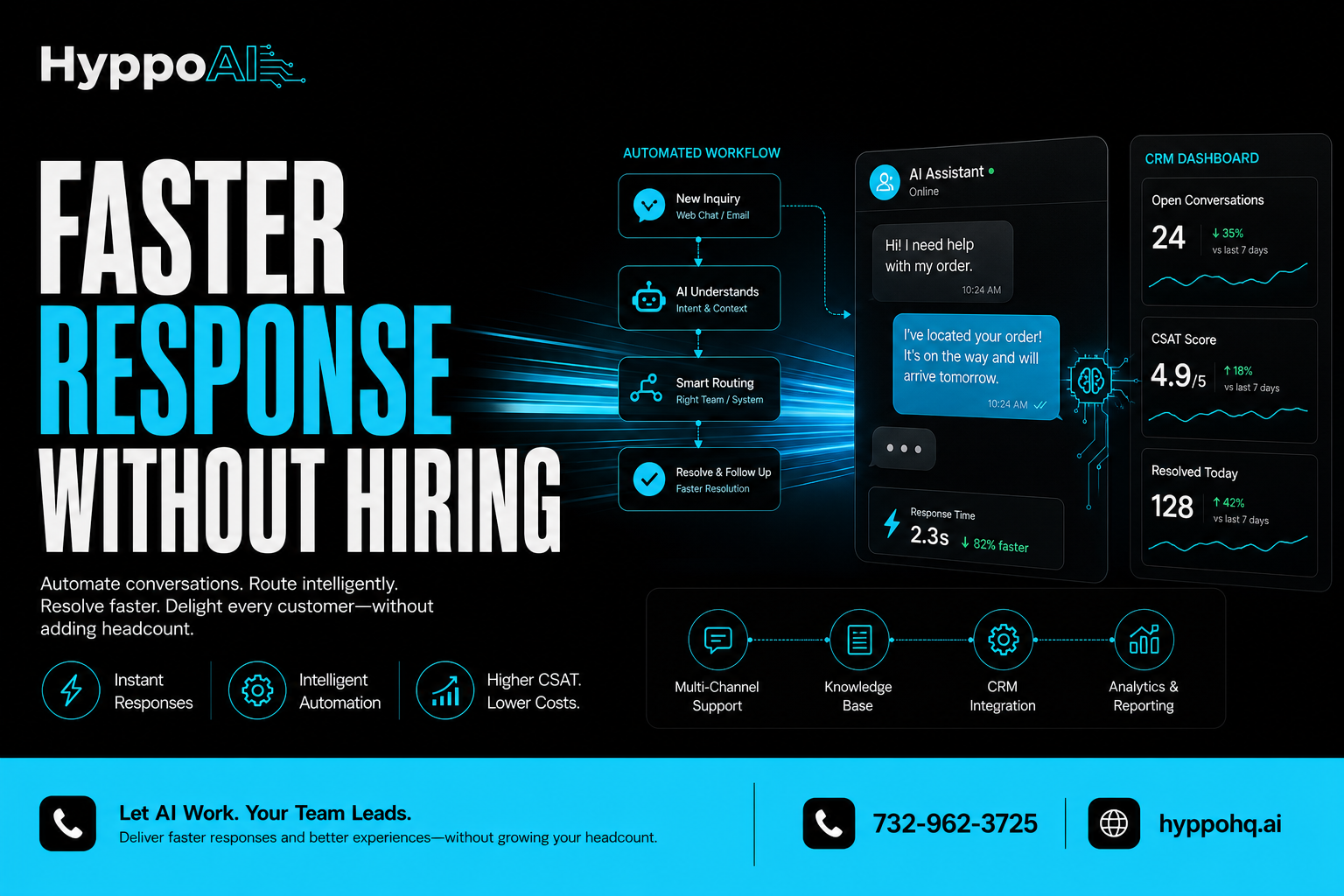
Business automation for faster response times without hiring
Speed matters in business.
When a lead calls, fills out a form, sends a message, or asks for pricing, the clock starts immediately. If your team is busy, understaffed, or juggling too many systems, response times slip. That delay can mean missed revenue, weaker customer trust, and more pressure to hire before you are ready.
The good news is that hiring is not the only way to improve responsiveness. Business automation can help small and midsize businesses respond faster, stay organized, and create a better customer experience without adding more people to the payroll.
Why response speed matters more than ever
Customers expect quick answers.
They do not compare your business only to direct competitors. They compare you to every fast digital experience they have every day. If someone reaches out and hears nothing for hours or days, they often move on.
Slow responses create problems like:
- Lost leads that go to a competitor
- Missed calls that never get returned
- Delays in booking appointments or consultations
- Inconsistent follow-up from busy team members
- Frustration for both staff and customers
For SMBs, this becomes a scaling issue. As inquiry volume grows, manual processes break down. The business gets busier, but the customer experience gets slower.
What business automation actually does
Business automation uses software and AI-powered workflows to handle repetitive communication and operational tasks automatically.
That does not mean replacing your team. It means removing the routine work that slows them down.
Automation can help with:
- Answering common questions instantly
- Routing inquiries to the right person
- Sending immediate confirmations and replies
- Following up with leads automatically
- Booking appointments and collecting details
- Logging conversations into your systems
Instead of relying on someone to manually notice, remember, and respond to every interaction, automation creates a process that runs consistently in the background.
How automation helps businesses respond faster without hiring
1. It provides instant first responses
One of the biggest response bottlenecks is the first touchpoint.
A prospect submits a contact form at night. A customer calls during lunch. A lead sends a message while your team is helping someone else. In a manual setup, those interactions wait.
With automation, they do not have to.
An automated system can:
- Send an immediate text or email acknowledgment
- Confirm that the request was received
- Share next steps clearly
- Ask qualifying questions right away
That instant response reassures the customer and keeps the conversation moving, even when your team is unavailable.
2. It captures leads that would otherwise be missed
Missed calls and delayed follow-up are common revenue leaks.
If no one answers the phone, many businesses simply lose the opportunity. Automation helps close that gap by making sure inbound interest is captured and addressed quickly.
Examples include:
- Automated missed-call text back
- AI receptionists that answer common questions
- Call routing based on urgency or department
- Follow-up sequences for unanswered inquiries
This means your business can stay responsive after hours, during peak times, and when staff is tied up.
3. It reduces manual back-and-forth
A lot of response delays are not caused by lack of effort. They are caused by too many steps.
Someone asks for an appointment. Your team emails back. The customer replies later. Then someone checks availability. Then another message goes out. That process can take hours or days.
Automation simplifies that chain.
It can:
- Offer scheduling options automatically
- Collect required intake information up front
- Trigger reminders and confirmations
- Move the conversation to the right stage automatically
Fewer steps mean faster outcomes for everyone.
4. It keeps follow-up consistent
Fast response is not only about the first reply. It is also about what happens next.
Many leads go cold because follow-up is inconsistent. Not because your team does not care, but because people are busy and manual reminders are easy to miss.
Automation helps by creating reliable follow-up workflows such as:
- Day-one lead check-ins
- Appointment reminders
- Quote follow-ups
- Re-engagement messages for inactive leads
- Post-service review requests
Consistency builds trust. It also increases the chance that a prospect becomes a customer.
5. It frees your team for higher-value work
Hiring often becomes the default solution when teams feel overloaded. But sometimes the issue is not headcount. It is task load.
If employees spend too much time answering the same questions, sending confirmations, or chasing routine follow-up, they have less time for work that actually requires human judgment.
Automation frees time for:
- Closing sales
- Handling complex customer needs
- Improving service quality
- Managing operations more effectively
- Building stronger client relationships
In other words, automation helps your current team operate like a larger one.
Common areas where SMBs can automate first
If you are just getting started, focus on the places where speed matters most and repeat tasks happen often.
Good starting points include:
Lead response
- Web form auto-replies
- New lead text follow-up
- Qualification questions
- CRM updates
Phone coverage
- AI receptionist support
- Missed-call text back
- Call routing
- Frequently asked question handling
Appointment workflows
- Self-scheduling links
- Confirmation messages
- Reminder sequences
- Reschedule support
Customer communication
- Status updates
- Intake forms
- Basic support answers
- Review and feedback requests
These are often the fastest wins because they improve both response time and operational consistency.
What automation does not mean
Some business owners hesitate because they think automation will make their brand feel robotic or impersonal.
That only happens when automation is poorly designed.
Good automation should:
- Sound clear and professional
- Match your brand tone
- Hand off to a human when needed
- Make the customer journey easier, not harder
The goal is not to remove people from the experience. The goal is to remove friction.
When done right, automation makes your business feel more responsive, more organized, and easier to work with.
Signs your business is ready for automation
You may be ready if:
- Leads are waiting too long for replies
- Your team misses calls regularly
- Follow-up happens inconsistently
- Staff spends hours on repetitive communication
- Growth is creating operational strain
- You want better responsiveness without immediate hiring
If any of those sound familiar, automation can likely create measurable improvements quickly.
The real advantage: scale without unnecessary overhead
Hiring can be the right move in some situations. But hiring before fixing workflow problems often adds cost without solving the root issue.
Automation gives businesses a smarter path.
It helps you:
- Respond faster
- Capture more opportunities
- Improve customer experience
- Reduce avoidable admin work
- Scale operations with more control
For SMBs, that can be the difference between feeling constantly behind and running a business that is structured for growth.
Final thoughts
If your business is losing time, leads, or momentum because responses are too slow, automation is worth a serious look. The right systems can help you move faster, stay consistent, and support growth without rushing into new hires.
HyppoAI helps SMBs use AI and automation to improve response times and streamline operations. To learn more, visit https://hyppohq.ai or call +17329623725.