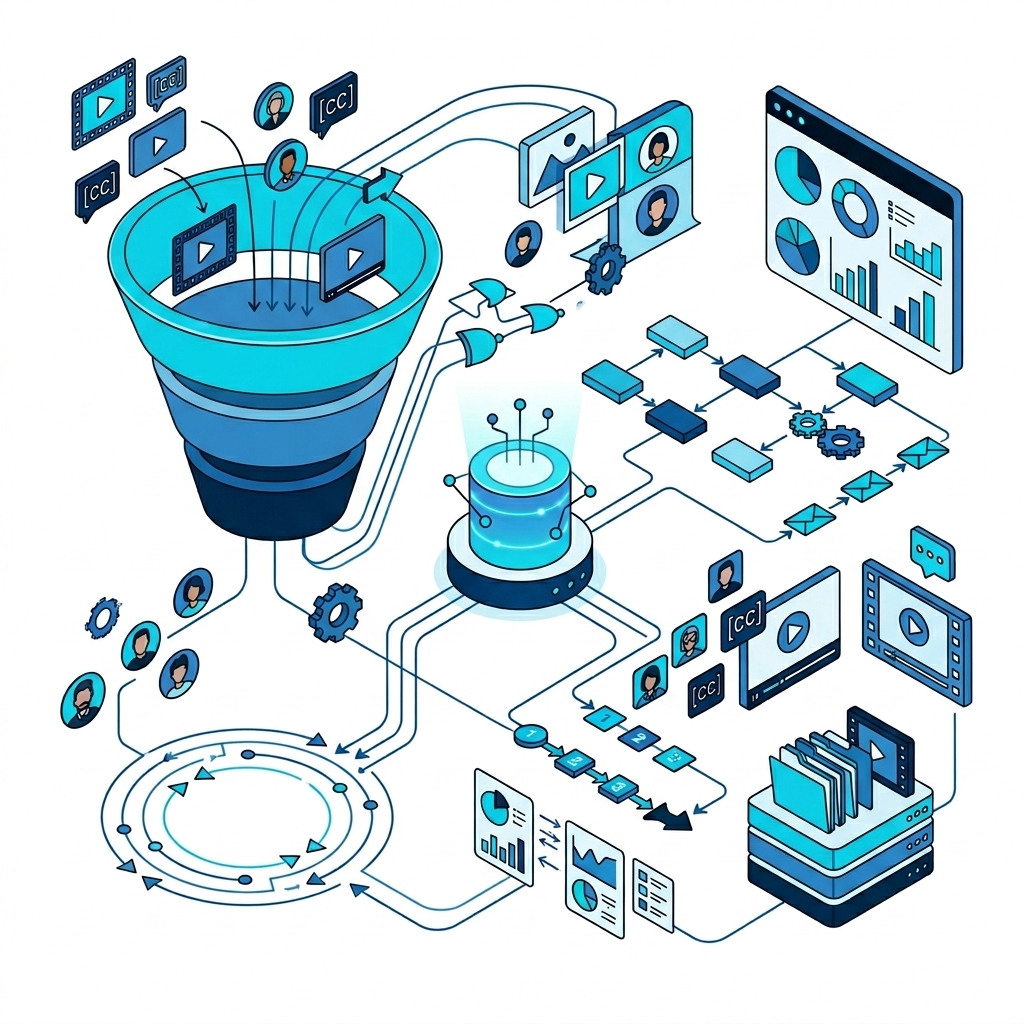
How AI Video Fits Into Modern Marketing Systems
What Do We Mean by AI Video?
AI video encompasses several capabilities often used together:
- AI-assisted editing: Tools that clean audio, remove filler words, cut silence, auto-generate captions, and suggest clips.
- AI-generated video: Systems that create avatars, animations, or stock-style footage from text, images, or audio prompts.
- AI personalization: Engines that modify video content, intros, calls-to-action, or overlays for different audiences.
- AI-driven insights: Analytics tools that analyze performance, viewer behavior, and sentiment to improve future videos.
In practice, most service businesses start by using AI to make existing video workflows faster and more consistent. Over time, AI-generated and highly personalized video content can be layered on top of those foundations.
Where AI Video Lives in a Modern Marketing System
Top-of-Funnel: Attracting and Educating New Audiences
At the awareness stage, AI video tools help produce more consistent content for search, social, and advertising without needing a large internal media team. Common uses include repurposing existing content into short-form vertical videos, auto-captioning and localization to expand reach, and variation testing of different hooks and intros.
Mid-Funnel: Nurturing and Educating Prospects
Once someone has shown interest in your services, AI video can support this by making it easier to create targeted, educational content: explainer sequences, dynamic demos tailored to industries or use cases, and FAQ and objection-handling libraries that are automatically clipped, transcribed, and tagged by AI.
Bottom-of-Funnel: Supporting Sales and Conversion
At the decision stage, AI-driven video tools can support personalized video messages, proposal walkthroughs summarizing scopes of work, and social proof and case summaries automatically cut into shorter clips for different channels.
Post-Sale: Onboarding, Retention, and Upsell
For service businesses, much of the real work happens after the sale. Video can reduce misunderstandings, standardize onboarding, and support long-term relationships through structured onboarding sequences, process and training videos generated from standard operating procedures, and customer education libraries categorized by topic.
How AI Video Connects to Data and Automation
Inputs: What Feeds the AI Video System
Most AI video outputs are only as useful as the inputs and context they receive: customer and prospect data from your CRM, content and knowledge assets like existing blog posts and documentation, and brand and compliance guidelines that constrain AI outputs.
Workflows: How AI Video Moves Through the System
AI video usually fits into repeatable workflows: content repurposing flows where long-form content generates clips and social cuts, trigger-based personalization where specific customer actions trigger tailored video messages, and lifecycle programs where AI video is one component among emails, SMS, and human touchpoints.
Feedback Loops: Measuring and Improving AI Video
Measurement is what turns AI video from a novelty into a managed part of your system. Useful feedback mechanisms include engagement analytics (watch time, drop-off points), variant comparison of different hooks and lengths, and qualitative insights from comments and support questions linked to specific videos.
Operational Considerations for Service Businesses
Consistency and Governance
AI tools make it possible to produce video content quickly, but this also increases the risk of inconsistent messaging. A basic governance approach covers templates and guardrails, approval flows with clear ownership, and version control for tracking which videos are in circulation.
Ethics, Transparency, and Expectations
Consider disclosure policies about when avatars or voiceovers were assisted by AI, data usage boundaries around personalization, and managing expectations that AI-generated visuals are illustrative and not literal depictions of outcomes or people.
If you want to understand how AI video, automation, and modern marketing systems can work together in your specific context, you can explore more resources or reach out to the HyppoAds team at hyppohq.ai/contact.