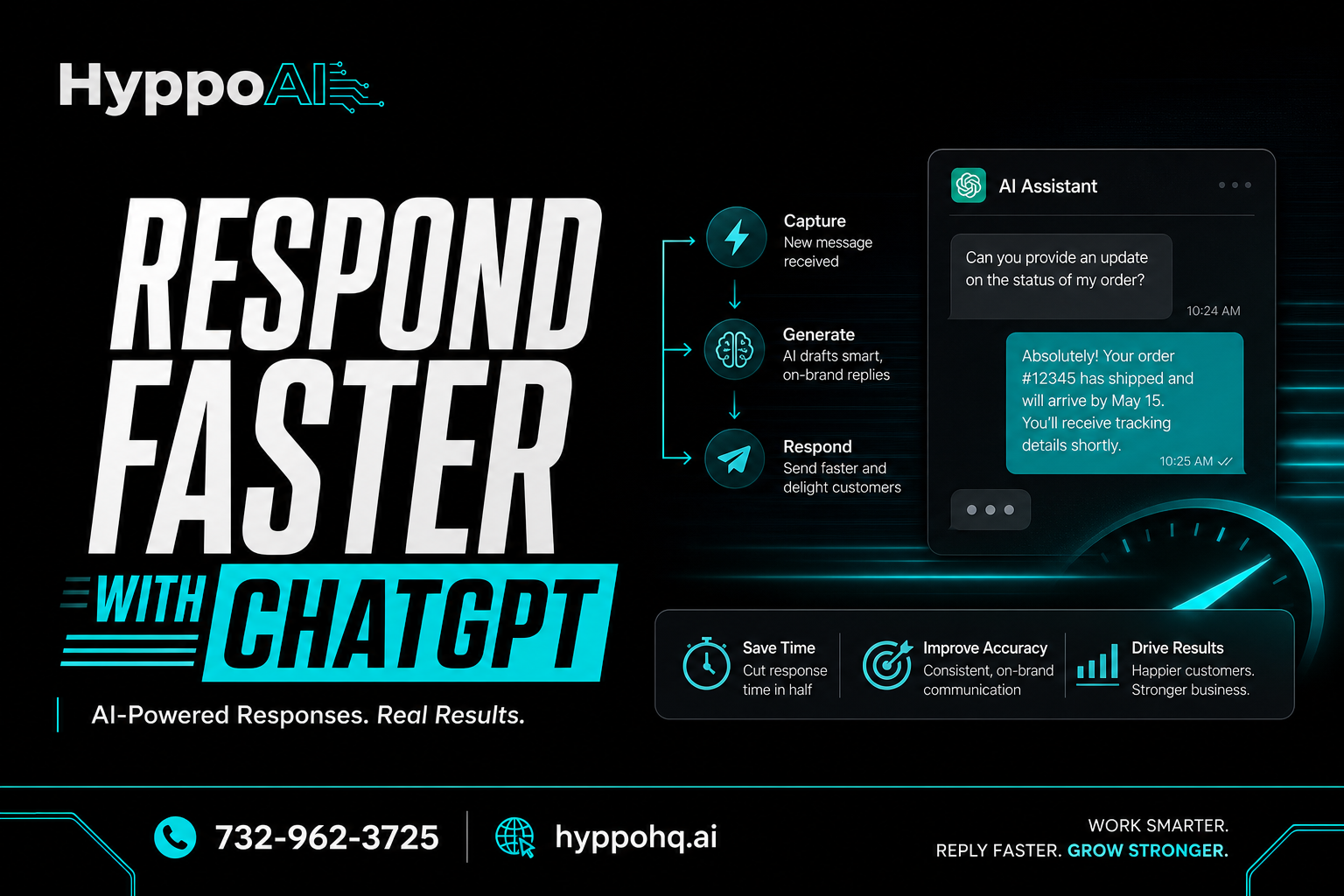
How ChatGPT helps you respond faster without rushing
Speed matters in business.
When a lead sends a message, a customer asks a question, or a prospect wants pricing, the clock starts immediately. Slow responses can cost trust, momentum, and revenue. But moving too fast creates a different problem: rushed replies that feel sloppy, unclear, or off-brand.
That is where ChatGPT becomes useful.
Used correctly, ChatGPT helps businesses respond faster without sacrificing quality. It does not replace good judgment. It supports it. For small and midsize businesses especially, that balance is powerful.
Why fast responses matter
Customers expect quick answers.
Whether they reach out through email, social media, website chat, or text, they want to know that someone is paying attention. A delayed response can signal disorganization. A rushed response can signal carelessness.
The goal is not just speed.
The goal is confident speed.
That means replies that are:
- clear
- accurate
- on-brand
- helpful
- easy to act on
ChatGPT can help teams get there by reducing the time spent staring at a blank screen, rewriting the same message, or trying to find the right words under pressure.
How ChatGPT helps you respond faster without rushing
At its best, ChatGPT acts like a drafting partner.
It helps organize thoughts, suggest wording, and create a strong first version quickly. Instead of starting from zero every time, your team starts with structure.
That changes the workflow.
1. It removes the blank-page delay
A lot of response time is not actual writing. It is hesitation.
People pause because they are deciding how to phrase something, how formal to sound, or how much detail to include. ChatGPT shortens that delay by generating a draft in seconds.
That draft can then be reviewed and adjusted, which is much faster than building every response from scratch.
2. It creates consistency across channels
One team member replies by email. Another answers Instagram DMs. Another handles website inquiries. Without a system, tone and quality can vary.
ChatGPT helps standardize communication by using proven prompts and reusable response patterns. That means your business can sound more consistent, even when different people are responding.
For SMBs, consistency builds trust.
3. It helps organize messy information fast
Sometimes the issue is not writing. It is sorting through too much information.
A customer message may be vague. An internal note may be incomplete. A service explanation may be too technical. ChatGPT can help summarize, simplify, and restructure content so the final response is easier to understand.
That leads to faster replies that still feel thoughtful.
4. It reduces emotional overreaction
Not every message is easy.
Some are frustrated. Some are demanding. Some are unclear. In those moments, speed can make things worse if the response is reactive.
ChatGPT helps by creating a calmer first draft. It gives your team a neutral starting point so they can respond professionally instead of emotionally.
That is a major advantage when reputation matters.
Where SMBs can use ChatGPT right away
You do not need a complicated AI stack to benefit.
Many businesses can start with a few high-impact use cases.
Customer service replies
Use ChatGPT to draft responses for:
- appointment questions
- pricing inquiries
- service explanations
- policy clarifications
- follow-up messages
This is especially useful when the same types of questions come up repeatedly.
Lead response and qualification
When a new lead comes in, speed matters. ChatGPT can help draft fast, professional first responses that acknowledge the inquiry and move the conversation forward.
Examples include:
- thanking the lead for reaching out
- asking the next qualifying question
- explaining next steps
- confirming availability
Social media and direct messages
Social platforms reward responsiveness, but DMs can pile up quickly. ChatGPT can help create short, on-brand replies that save time without sounding robotic.
Internal communication
ChatGPT is not only for customer-facing messages. It can also help with:
- summarizing meeting notes
- drafting team updates
- rewriting unclear instructions
- turning rough ideas into polished communication
Faster internal communication often leads to faster external response times too.
The key: use ChatGPT as a first draft, not final autopilot
This is where many businesses get it wrong.
If you copy and paste every AI-generated response without review, quality drops. Details get missed. Tone can drift. Context can be lost.
The better approach is simple:
- let ChatGPT draft
- let your team review
- let a human make the final call
That process is what helps you respond faster without rushing.
You are not handing over judgment. You are removing friction.
Tips to get better results from ChatGPT
The quality of the output depends heavily on the quality of the input.
Here are a few practical ways to make ChatGPT more useful.
Give clear context
Instead of saying, “Reply to this customer,” provide specifics.
Include:
- what the customer asked
- what outcome you want
- the tone you want to use
- any facts that must be included
The more precise the prompt, the better the draft.
Build reusable prompt templates
If your team handles similar messages every day, create prompt templates for common situations.
For example:
- new lead inquiry response
- missed appointment follow-up
- review request reply
- pricing explanation
- customer concern resolution
Templates save time and improve consistency.
Keep your brand voice in the prompt
If your business is direct, warm, concise, or highly professional, say so. ChatGPT performs better when it knows how your business should sound.
For HyppoAI, that means communication that is clear, practical, and focused on real business outcomes.
Review for facts and nuance
Always check names, pricing, timelines, and service details before sending. AI can help with wording, but your team should verify anything specific.
Common mistakes to avoid
ChatGPT can speed up response workflows, but only if it is used intentionally.
Avoid these common mistakes:
Over-automating sensitive conversations
Complaints, billing disputes, and emotionally charged issues often need more human care. Use ChatGPT to support the draft, not replace empathy.
Writing prompts that are too vague
Weak prompts create generic replies. Generic replies often sound rushed, even if they were generated quickly.
Ignoring brand tone
A fast response that sounds unlike your business can create confusion. Consistency matters as much as speed.
Skipping final review
The fastest reply is not always the best reply. A 20-second review can prevent errors that cost much more time later.
Faster responses create better business momentum
When your team responds quickly and clearly, everything improves.
Leads stay engaged. Customers feel supported. Conversations move forward. Your business appears more organized and more reliable.
That is the real value of ChatGPT.
It is not just about writing faster.
It is about helping your business communicate with more control under pressure.
For SMBs trying to do more with lean teams, that advantage compounds quickly.
Final thought
If your team is stuck between slow replies and rushed replies, ChatGPT can help create a better middle ground. With the right prompts, review process, and workflows, you can move faster while still sounding sharp, thoughtful, and professional.
If you want to build smarter response systems for your business, HyppoAI can help. Visit https://hyppohq.ai or call +17329623725 to learn how practical AI workflows can support faster, better communication.