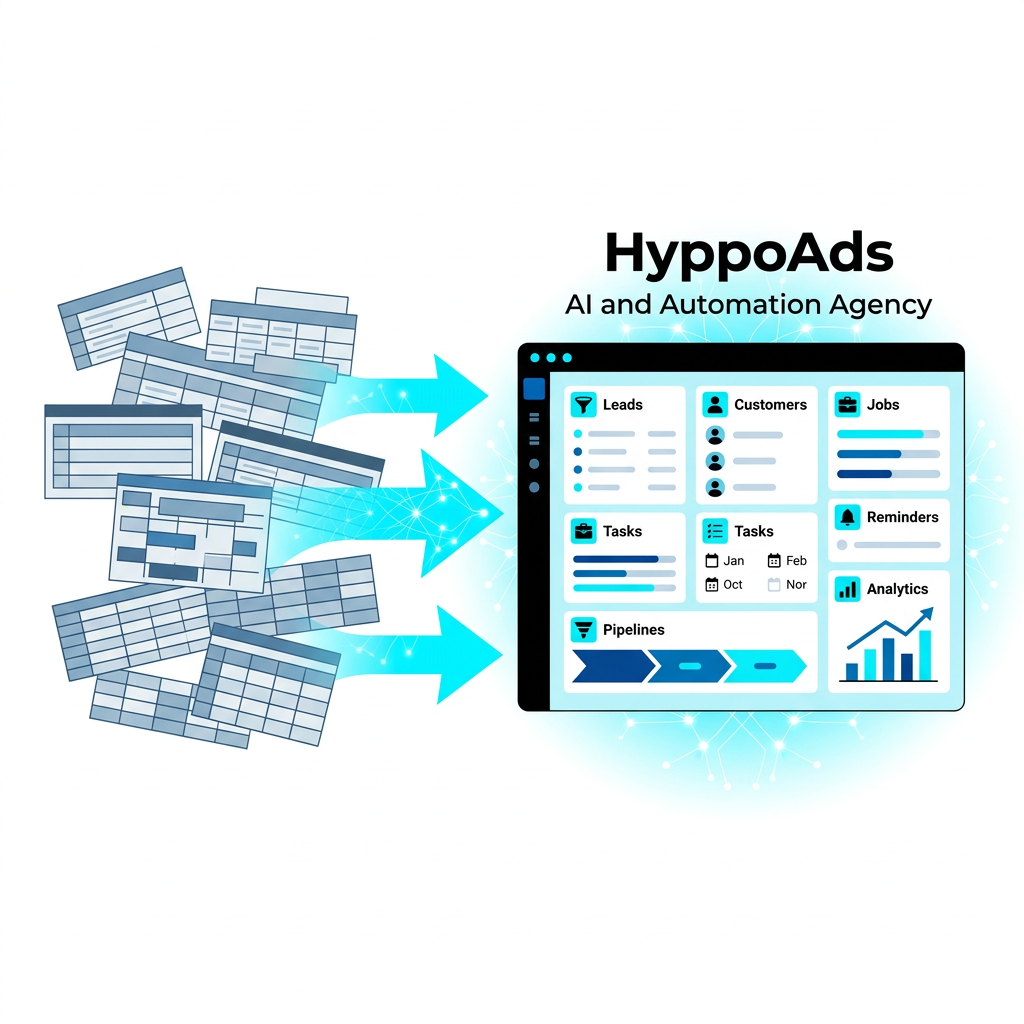
How HyppoCRM Helps Businesses Stay Organized Without Spreadsheets
How HyppoCRM Helps Businesses Stay Organized Without Spreadsheets
Many service businesses still run on spreadsheets. Client lists, job details, follow-ups, billing notes, and even marketing activities often live in separate files that only a few people fully understand. This can work for a while, but it usually becomes fragile, slow, and hard to scale.
HyppoCRM is designed to replace that fragile maze of spreadsheets with a centralized, AI-aware customer relationship management (CRM) system built for modern service operations.
Why Spreadsheets Break Down as You Grow
- Version confusion: Different team members edit different copies of the same sheet, and no one is sure which one is current.
- Data entry errors: Manual copying and pasting increases the risk of missing rows, wrong dates, or mismatched client information.
- Lack of context: A row in a sheet rarely tells the full story about a customer, their history, and their interactions with the team.
- No automation: Spreadsheets rarely trigger actions such as reminders, follow-ups, or updates to other systems without complex workarounds.
- Limited collaboration: As more people need access, it becomes harder to control who can change what and how updates are tracked.
What HyppoCRM Brings Instead of Spreadsheets
A Single Source of Truth for Customer Data
Instead of customer details scattered across multiple files, HyppoCRM keeps information in one place. Each contact becomes a record with structured fields and a full activity history. This creates consistent data fields, centralized history, and shared access across team members.
Pipeline Views Instead of Ad Hoc Status Columns
HyppoCRM replaces loose status systems with defined pipelines and stages. Leads, opportunities, or jobs move from one stage to another using clear rules. Instead of manually sorting or filtering spreadsheet rows, users can view filtered lists or boards of records by stage, owner, or priority.
Activity Tracking Without Manual Log Sheets
HyppoCRM centralizes activity tracking. Notes, tasks, messages, and updates are attached directly to the contact or job record. Over time, each record becomes a timeline of what has happened, who handled it, and when. This helps businesses understand the full context before the next call or visit, reduce duplicate outreach, and see which communication patterns tend to move work forward.
How AI and Automation Reduce Manual Spreadsheet Work
Structured Data Capture at the Source
Instead of staff manually keying information into sheets, HyppoCRM can capture data directly from forms, inquiries, and other systems. When a new lead submits a web form, for example, their information can become a CRM record automatically.
Automated Follow-Up and Reminders
HyppoCRM can associate tasks and reminders with specific customers and pipeline stages. Workflows can be defined so that when a lead reaches a certain stage, follow-up tasks or reminders are created automatically.
Smart Segmentation Instead of Manual Filtering
HyppoCRM supports stored views and segments based on consistent criteria: service type, last activity date, location, or stage in the pipeline. These segments can then inform communication, scheduling, or reporting without recreating filters every time.
Operational Visibility Beyond Spreadsheet Reports
HyppoCRM offers reporting and dashboard views built from the same structured data used for daily operations. Leaders can see trends, identify bottlenecks, and review activity patterns without exporting and reformatting data in new sheets each week.
Fitting HyppoCRM Into a Broader AI and Automation Strategy
HyppoCRM can serve as the central customer and workflow hub that connects to other parts of the business. When data flows through a central CRM instead of dozens of spreadsheets, it becomes easier to align sales, service delivery, and customer support on the same information, use AI tools to analyze patterns, and automate communication and reminders based on reliable data.
If you want to explore how a CRM like HyppoCRM could fit into your operations, you can learn more or get in touch with the team at Hyppo Advertising Inc. by visiting hyppohq.ai/contact.