The Real Reason Leads Go Cold So Fast
The Real Reason Leads Go Cold So Fast
Many service business owners share the same frustration: leads look promising at first, then disappear without a word. In reality, there are consistent, structural reasons why leads go cold so quickly. Most of them have less to do with your offer and more to do with timing, expectations, and the systems that sit between your marketing and your operations.
Cold Leads Are Usually a Systems Problem, Not a Sales Problem
When leads stop replying, it is easy to assume the lead was never serious, your price was too high, or the market is just slow. But for most service businesses, the bigger issue is system design. Modern buyers live in an environment of constant digital noise, instant options, and low switching costs. If your follow-up process is slow, inconsistent, or manual, even interested people can quietly drift away.
The Hidden Timeline: What Happens Right After a Lead Inquires
1. The lead is still in research mode
When someone fills out a form, sends a message, or books a call, they are often contacting multiple providers in a short window. They may have five tabs open comparing local businesses, multiple social media DMs out at the same time, and search results filled with competing offers. Whoever acknowledges them first often gets the first real conversation.
2. Their attention window is extremely narrow
Most people inquire while they are in the middle of a busy day. Their intention is high in that moment, but their attention is fragile. If they don't hear back quickly, they may forget they even reached out. By the time a delayed response arrives, they have mentally moved on.
3. Your internal process might be creating invisible friction
Common friction points: leads living in email inboxes with no tracking, team members sharing a single phone or social media login, no clear owner for new inquiries during evenings or weekends, and relying on memory instead of structured reminders and pipelines.
The Real Reasons Leads Go Cold So Fast
Reason 1: Slow or inconsistent response times
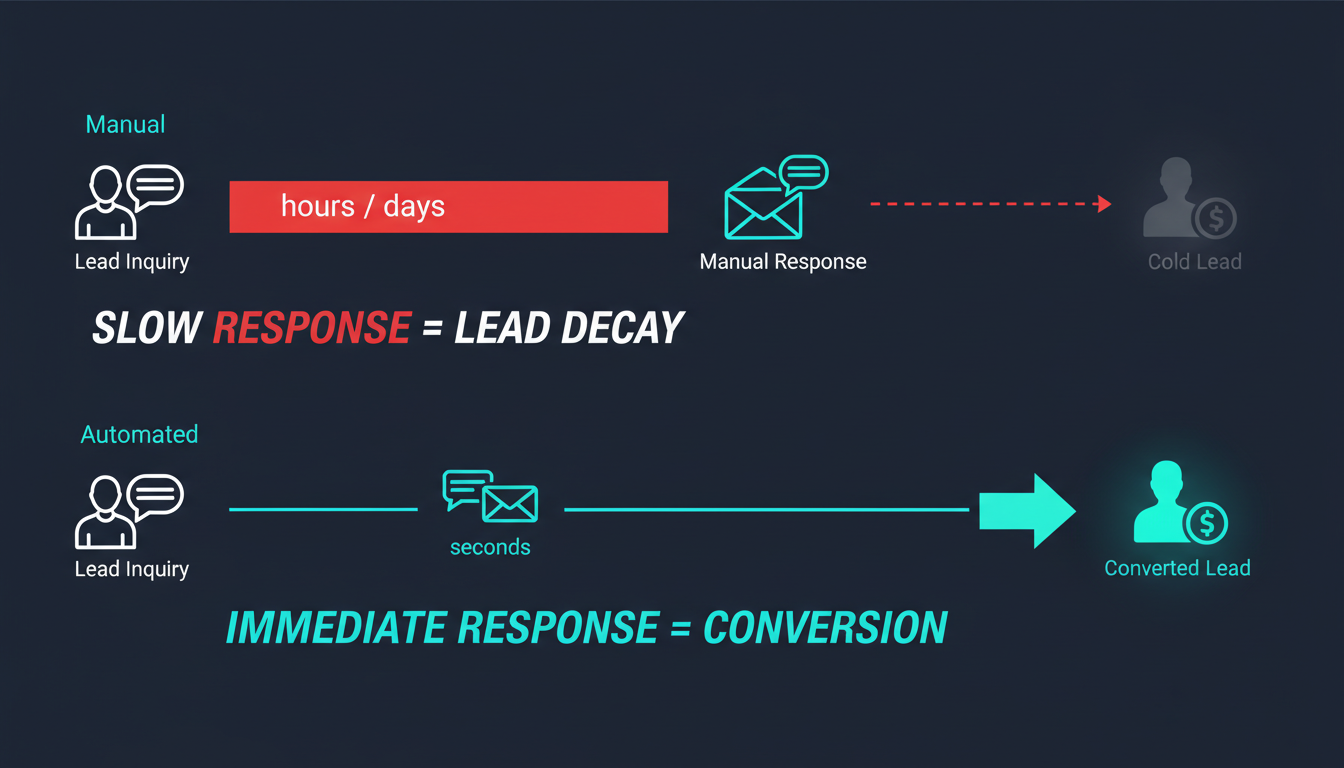
Response speed is one of the strongest predictors of whether a conversation continues. In a world where buyers can get instant responses from chatbots, marketplaces, and competitors who answer quickly, a delay of even a few hours can feel like a non-response.
Reason 2: One-channel follow-up in a multi-channel world
Many teams rely on a single channel for follow-up such as a phone call or one email. Meanwhile, your lead may be more responsive on text, messaging apps, or social platforms. Without structured multi-channel touchpoints, the conversation can look dead when it is really just misaligned.
Reason 3: No clear next step for the lead
Even when you respond quickly, leads often cool down if the next step is vague: "Let us know when you want to schedule" instead of a direct booking link, long email threads before a simple appointment is set, or confusing information about pricing, timelines, or process.
Reason 4: Lead intent changes faster than your follow-up cadence
Intent is dynamic. Someone highly motivated on Monday may be overwhelmed or less interested by Thursday. When follow-up is delayed or spaced too far apart, you may be matching your outreach to a version of the lead that no longer exists.
Reason 5: No system for structured, long-term nurturing
Not every lead who goes quiet is truly lost. Some are just early in their decision cycle. Without a centralized CRM, automated check-ins over weeks or months, or content that educates and stays top-of-mind, your brand disappears from the lead's radar.
How AI and Automation Change the Lead Experience
Modern AI and automation tools can fundamentally change how responsive, consistent, and personalized your lead experience can be:
- Listening for new leads across multiple channels in real time.
- Sending immediate, context-aware acknowledgments and questions.
- Offering self-serve scheduling options 24/7.
- Orchestrating multi-channel communication that feels timely and coordinated.
- Recognizing returning leads and picking up where they left off.
Designing Infrastructure That Keeps Leads Warm
When thinking about your own systems, evaluate: How quickly does every lead receive a meaningful response, day or night? Is there a clear record of each interaction, accessible to your team? Are follow-ups planned and automated, or improvised on the fly? Can leads move themselves forward (for example, by booking) without waiting on a person?
Reframing Cold Leads as a Signal
When leads go cold, it is easy to view it as wasted marketing spend. Another way to view it is as feedback about your systems. Each silent lead is pointing to a moment where timing, clarity, or responsiveness did not align with their decision process. By focusing on the structure of your lead handling rather than only the volume of incoming leads, you can often uncover simple but powerful improvements.
If you would like to explore what this might look like in a practical way for a service business, you can reach out to the team at HyppoAds at hyppohq.ai/contact.