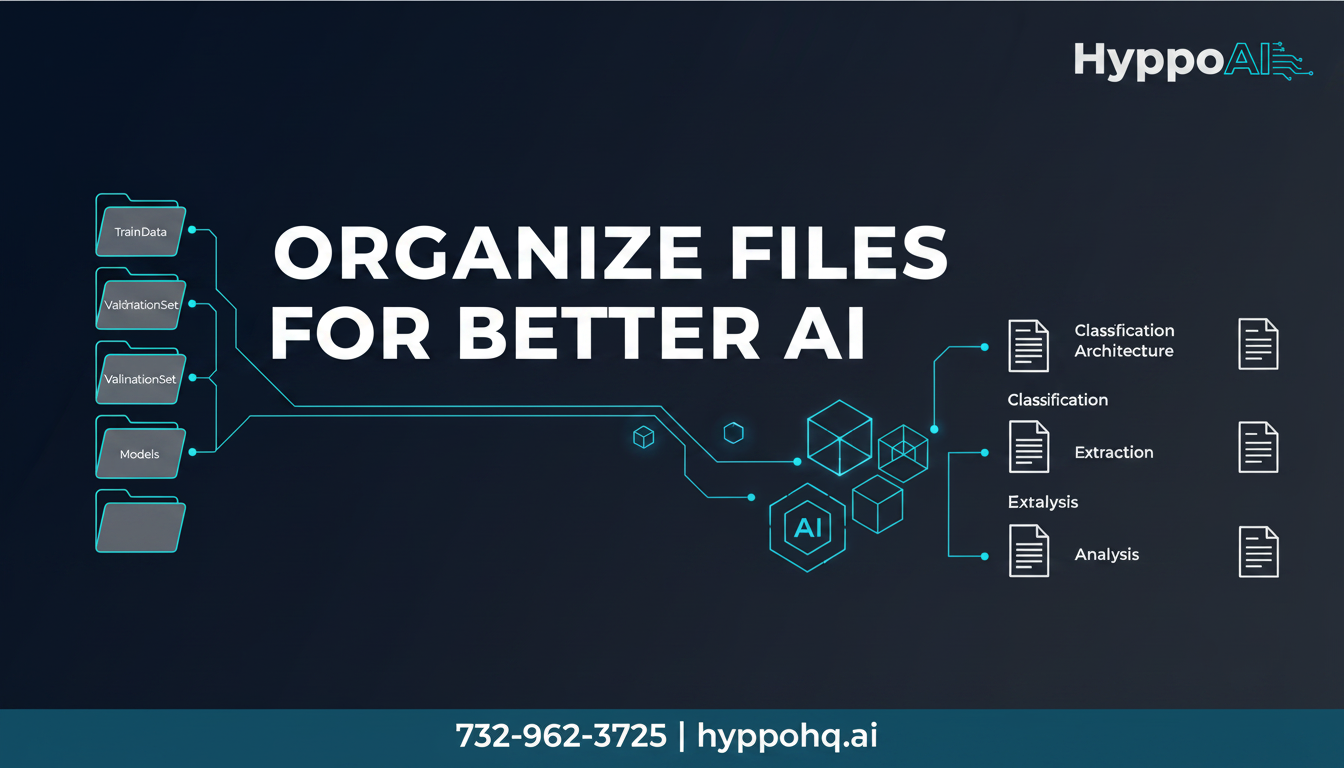
Why file organization still matters in AI systems
AI gets the spotlight, but file organization still does a lot of the heavy lifting.
If your documents are scattered across desktops, shared drives, inboxes, and random folders called “misc,” your AI systems will feel that chaos. They may still produce answers, summaries, and recommendations, but the quality of those outputs depends heavily on how your information is stored, labeled, and maintained.
For SMBs, this matters even more. You do not need a massive enterprise data stack to benefit from AI, but you do need structure. Good file organization helps AI find the right information faster, reduces errors, supports compliance, and makes your workflows easier to scale.
AI is only as good as the information it can access
AI systems do not magically understand your business just because you upload a few files. They rely on the content they can retrieve, parse, and match to a task.
When files are poorly organized, several problems show up fast:
- Duplicate documents create conflicting answers
- Old versions get used instead of current ones
- Important files are buried in unclear folders
- Naming conventions make search unreliable
- Permissions are inconsistent or too broad
That means your team spends more time checking outputs, correcting mistakes, and hunting for the source of truth.
Well-organized files create a cleaner foundation. AI can retrieve more relevant content, rank results better, and provide outputs that are easier to trust.
File organization improves retrieval quality
Many modern AI workflows depend on retrieval. Whether you are using internal search, document question-answering, or knowledge assistants, the system needs a way to locate the right content before it can generate a useful response.
Structure helps AI narrow the search
Folders, tags, naming conventions, and document types all provide context. That context helps systems separate:
- Policies from drafts
- Contracts from templates
- Client files from internal documentation
- Current procedures from archived material
Without structure, retrieval becomes noisy. AI may pull in similar-looking but irrelevant files, which lowers confidence and increases hallucination risk.
Metadata matters more than most teams think
Metadata can include:
- File owner
- Department
- Date created
- Date updated
- Version number
- Document status
- Client or project name
This extra layer of information makes filtering and ranking more accurate. Even simple metadata standards can make a major difference in how useful your AI tools become.
Better organization reduces version-control problems
One of the most common business problems is not a lack of information. It is too many versions of the same information.
You have likely seen files like these:
- Proposal-final
- Proposal-final-v2
- Proposal-final-v2-updated
- Proposal-final-USE-THIS-ONE
Humans struggle with that. AI struggles too.
If multiple versions exist with no clear archive rule or naming standard, your system may retrieve outdated terms, pricing, instructions, or brand language. That creates confusion internally and inconsistency externally.
A simple versioning system helps
You do not need to overengineer this. Start with a practical standard such as:
- Clear file names
- Standard date format like YYYY-MM-DD
- Status labels such as draft, approved, archived
- One defined source of truth for active documents
The cleaner your version control, the more reliable your AI outputs become.
Organization supports security and permissions
Not every file should be accessible to every system or employee.
As businesses adopt AI, access control becomes more important, not less. If your files are disorganized, it is harder to know:
- What sensitive data exists
- Where it is stored
- Who should access it
- What should be excluded from AI tools
That creates unnecessary risk.
A well-organized file system makes it easier to apply permissions by folder, team, project, or document type. It also helps you separate public-facing knowledge from confidential operational or financial information.
For SMBs, this is a practical win. Better organization is not just about productivity. It is also about reducing exposure.
Good systems make automation easier to build
AI and automation work best when inputs are predictable.
If incoming files follow a consistent structure, your workflows can do more with less manual cleanup. For example, organized files make it easier to:
- Route documents to the right team
- Trigger summaries or data extraction
- Index content into a knowledge base
- Generate client updates from standard records
- Audit activity across departments
When file organization is inconsistent, every automation needs exceptions. Exceptions create fragility. Fragility slows down adoption.
Standardization beats complexity
A lot of SMBs think they need advanced AI before they need operational discipline. Usually, the opposite is true.
Get the structure right first:
- Standard folder hierarchy
- Shared naming rules
- Defined retention policies
- Archived vs active separation
- Basic ownership for key directories
Once those are in place, AI tools become easier to implement and far more useful.
File organization helps humans too
This point gets overlooked. Better organization is not just for machines.
Your team needs to find things quickly, understand what is current, and collaborate without confusion. If employees cannot locate the right document in 30 seconds, AI will not fully solve the problem. It may mask it for a while, but the underlying mess remains.
Strong file organization improves:
- Onboarding for new hires
- Cross-team collaboration
- Response speed to clients
- Internal consistency
- Confidence in decision-making
In other words, it improves operations before AI even enters the picture.
Practical ways SMBs can improve file organization
You do not need a massive cleanup project to start seeing results. Focus on a few high-impact changes.
1. Define a naming convention
Make file names readable and consistent. Include useful identifiers like date, client, department, and status where relevant.
Example:
- 2026-04-clientname-service-agreement-approved
2. Create a simple folder structure
Keep it intuitive. Organize by business function, client, project, or process, depending on how your team works.
Avoid deep, confusing folder trees that only one person understands.
3. Establish one source of truth
For important documents, define the official location of the active version. Archive old versions instead of leaving them mixed in with current materials.
4. Add lightweight metadata or tags
If your systems support tags, use them. Even a few consistent labels can improve retrieval and filtering.
5. Review permissions
Separate sensitive data from general operational content. Make sure AI-connected systems only access what they should.
6. Audit high-value documents first
Start with the files that matter most:
- SOPs
- Pricing sheets
- Contracts
- Sales collateral
- Client records
- Internal policies
These often drive the most visible AI use cases.
The bottom line
AI systems do not eliminate the need for file organization. They make its importance more obvious.
If your business wants better AI outputs, faster retrieval, cleaner automation, and lower operational friction, start with the foundation. Organized files help AI work with context, accuracy, and control.
For SMBs, that is good news. You do not need to do everything at once. You just need a system your team can follow consistently.
If you want help building practical AI systems on top of cleaner business operations, HyppoAI can help. Visit https://hyppohq.ai or call +17329623725 to learn how to make your workflows more organized, usable, and ready for AI.