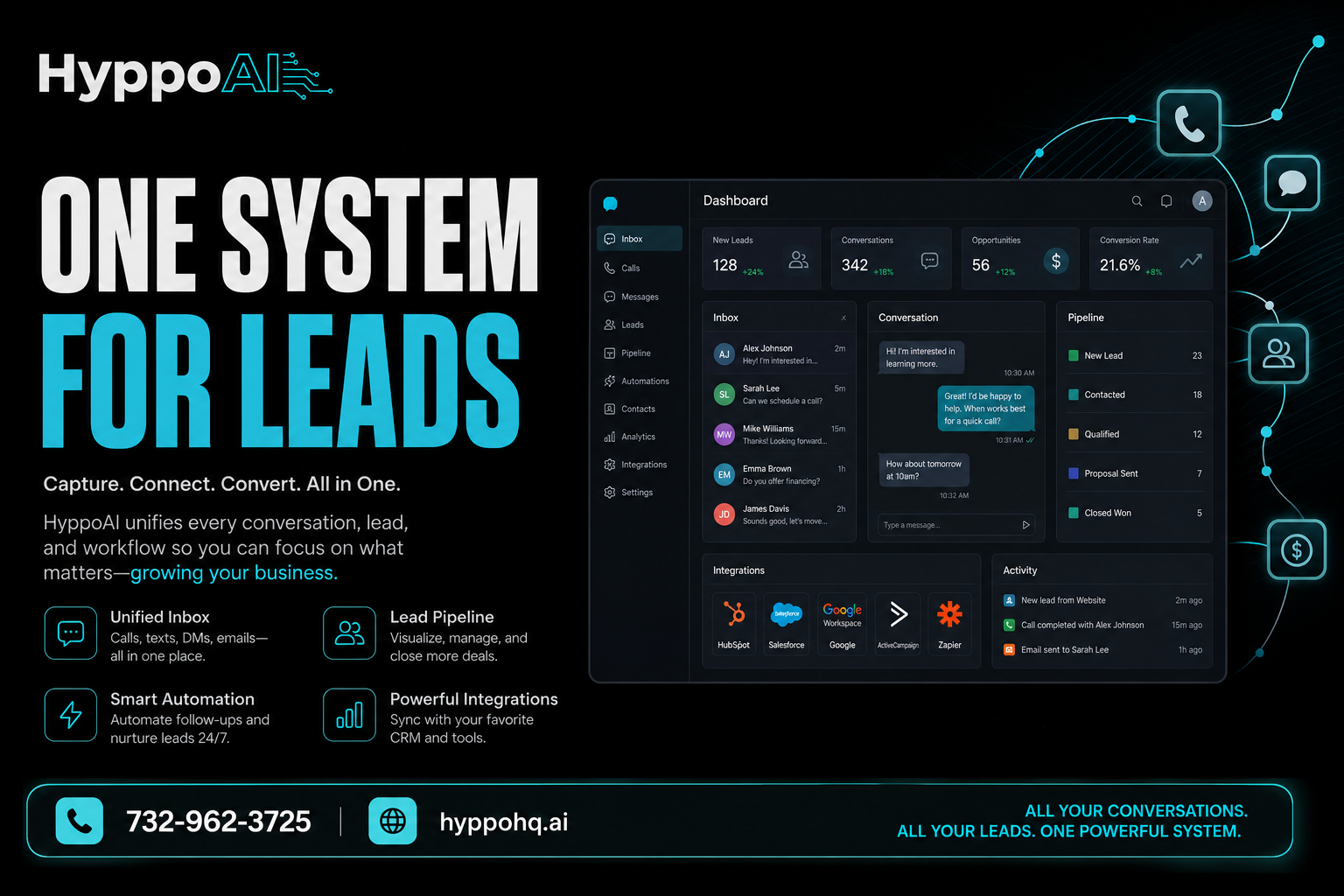
Why one system for calls, messages, and leads matters
If your business handles calls in one tool, messages in another, and leads in a spreadsheet or inbox, you are not running one process. You are running several disconnected ones.
That usually works until volume increases. Then missed calls pile up, response times slow down, and leads fall through the cracks. The problem is not always effort. More often, it is fragmentation.
For small and growing businesses, one system for calls, messages, and leads matters because it creates clarity. It gives your team a single place to see what happened, what needs action, and what is most likely to turn into revenue.
The hidden cost of disconnected tools
Most businesses do not notice the full cost of disconnected communication right away. A missed text here, a voicemail there, a lead form sitting in an inbox for a few hours. Each issue feels small on its own.
Together, they create real drag on growth.
Here is what usually happens when systems are split:
- Calls are answered in one app, but notes never make it into the CRM
- Text conversations happen on personal phones or separate inboxes
- Web leads arrive by email and wait too long for a response
- Team members do not know who followed up last
- Managers cannot easily track where leads came from or where they stalled
- Customers get inconsistent experiences depending on the channel they used
This creates operational friction. It also affects trust. A prospect does not care that your tools are disconnected. They only notice that they had to repeat themselves, wait too long, or never got a reply.
Why one system improves speed
Speed matters in lead conversion. The business that responds first often wins, especially in competitive service markets.
When calls, messages, and leads are managed in one system, your team can respond faster because the context is already there. You do not need to switch tabs, search inboxes, or ask around to figure out what happened.
A unified system helps teams:
- See new inquiries in real time
- Route conversations to the right person faster
- Continue the conversation across channels without losing context
- Trigger follow-up automatically when no one responds
- Reduce delays caused by manual handoffs
The result is simple: fewer missed opportunities and a smoother path from first contact to booked appointment or closed sale.
Better visibility means better decisions
When information is scattered, reporting becomes guesswork. You may know how many leads came in, but not how many were contacted quickly. You may know how many calls were missed, but not whether those callers were ever recovered.
One system gives you a cleaner picture.
What visibility looks like in practice
With a centralized setup, you can more easily answer questions like:
- How many inbound calls became real leads?
- How many missed calls received a text-back or follow-up?
- Which source is generating the highest-quality inquiries?
- How long does it take your team to respond?
- Where are leads getting stuck in the process?
These are not vanity metrics. They are operational metrics. They help you identify bottlenecks, improve accountability, and make smarter decisions about staffing, marketing, and automation.
Consistency builds trust
Customers expect businesses to be responsive, organized, and easy to reach. They also expect continuity. If they call first and text later, they do not want to start over.
A single system helps create that continuity.
Instead of fragmented conversations, your team sees one timeline. That means:
- Fewer repeated questions
- More accurate follow-up
- Better handoffs between team members
- A more professional customer experience
Consistency may not sound exciting, but it is one of the fastest ways to build trust. And trust is what moves a lead from interested to ready.
One system reduces manual work
Many businesses are doing more manual admin work than they realize. Copying notes, forwarding messages, updating spreadsheets, checking voicemails, and chasing internal updates all take time.
That time adds up.
When your communication and lead management live together, you can automate more of the routine work.
Common efficiencies from a unified system
- Automatic lead capture from calls, forms, and messages
- Shared conversation history across the team
- Follow-up reminders and workflows
- Missed call text-back sequences
- Lead status updates in one place
- Fewer duplicate entries and fewer errors
This is where operations start to scale. Not because your team is working harder, but because the system is doing more of the coordination work for them.
It helps teams stay aligned
As businesses grow, communication problems become team problems. Sales, admin, support, and operations may all touch the same lead or customer, but without a shared system, everyone is working from partial information.
That leads to confusion fast.
A unified system creates alignment because everyone is looking at the same record, the same conversation history, and the same next step.
This matters even more for SMBs, where small teams wear multiple hats. If one person is out, someone else should be able to step in without losing momentum.
Why this matters for SMB growth
Large companies can sometimes absorb inefficiency for longer. Small and midsize businesses usually cannot. Every missed lead, delayed response, or broken follow-up process has a bigger impact.
That is why one system matters so much for SMBs.
It helps protect the opportunities you are already paying to generate. If you are investing in ads, SEO, referrals, or outbound efforts, the system behind your response process needs to be strong enough to convert that attention into action.
Without that, growth gets expensive.
Where AI fits in
AI is not just about generating content or answering random questions. In operations, AI can help businesses respond faster, qualify leads, route conversations, and maintain follow-up without adding more manual overhead.
When AI is layered into one connected system, it becomes more useful because it has the context it needs.
For example, AI can support:
- Instant responses to inbound inquiries
- Smart routing based on lead type or urgency
- Automated follow-up after missed calls
- Conversation summaries for faster handoff
- Lead qualification before a human steps in
The key is not adding more tools. The key is making sure the tools work together in one process.
Signs your business needs one system now
If any of these sound familiar, it may be time to simplify:
- You are missing calls during busy hours or after hours
- Leads come from multiple places and follow-up feels inconsistent
- Team members use different tools to communicate with prospects
- You cannot easily tell which leads were contacted and when
- Customers repeat themselves across calls, texts, and email
- Reporting on lead response and conversion is messy
These are not just workflow annoyances. They are signals that your current setup may be limiting revenue.
The bottom line
One system for calls, messages, and leads matters because growth depends on speed, visibility, and consistency. When communication is scattered, opportunities get lost. When everything is connected, your team can respond faster, stay aligned, and create a better customer experience.
For SMBs, that can be the difference between steady growth and constant follow-up chaos.
If you want to simplify how your business handles inbound communication and lead follow-up, HyppoAI can help. Visit https://hyppohq.ai or call +17329623725 to learn how a more connected system can support smarter growth.