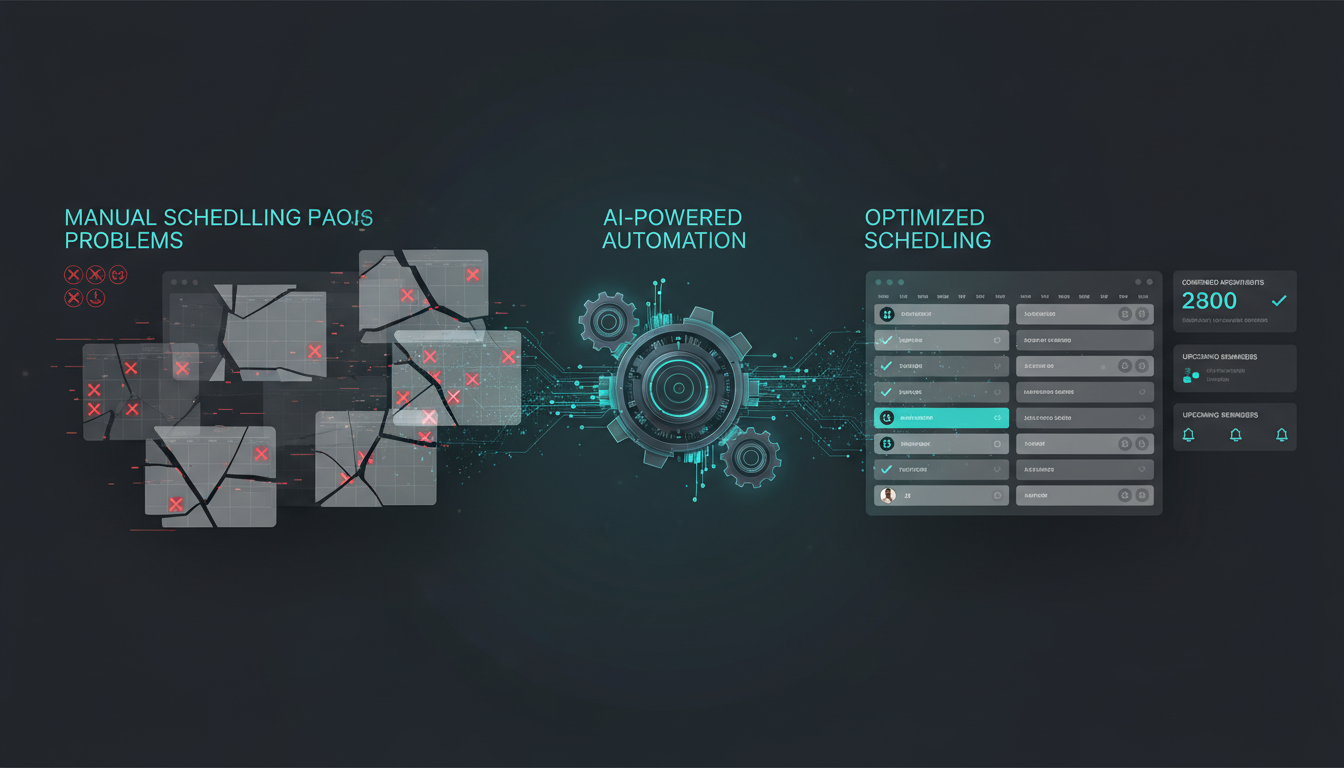
Why Scheduling Is a System Problem
Why Scheduling Is a System Problem, Not Just a Calendar Issue
For many service businesses, scheduling feels like a constant firefight: last-minute cancellations, double bookings, underutilized staff, and frustrated customers. It is easy to blame people or tools, but most recurring scheduling challenges are actually system problems.
Thinking of scheduling as a system problem changes how you diagnose issues and where you invest time and money. Instead of asking "Who messed up?" you start asking "What about the way our work flows makes this outcome likely?"
What It Really Means to Call Scheduling a System Problem
Scheduling is more than putting names on a calendar. It is how your business decides who does what work, when work happens, with what resources and constraints, and in response to what demand and priorities. Those decisions emerge from a mix of policies, tools, habits, assumptions, and data — that entire combination is your scheduling system.
Why Scheduling Problems Keep Reappearing
1. Fragmented Information
Schedulers frequently work from partial views: customer data lives in one platform, staff availability in another, job details in email or chat, and notes and exceptions in someone's head. When information is fragmented, people fill gaps with assumptions that work for a while but do not scale.
2. Unclear Rules and Priority Logic
Most businesses have unwritten rules about scheduling: which jobs get priority when demand spikes, how far technicians are expected to travel, how to handle VIP customers. When these rules exist only in people's heads, two different schedulers can look at the same day and build completely different workloads.
3. Tools That Do Not Match How Work Actually Happens
It is common to adopt a scheduling or calendar tool, then bend operations around the tool. The result: time slots that do not reflect real job durations, capacity planning that ignores drive time, inflexible templates for variable services, and manual workarounds outside the system.
4. No Feedback Loop Between the Field and the Schedule
Real work rarely runs according to plan. Jobs take longer or shorter than expected. Without a feedback loop connecting what was planned to what actually happened, estimated durations and capacity assumptions drift away from reality over time.
Where AI and Automation Fit Into Scheduling Systems
Automating Repetitive, Rule-Based Decisions
Many scheduling decisions are repetitive and follow predictable rules: matching appointment types with specific skills or certifications, respecting maximum daily capacity, avoiding overbooking beyond a certain threshold, and balancing work across zones or territories. Automation tools can apply these rules consistently and instantly.
Using AI to Better Match Demand and Capacity
AI models can analyze historical demand, seasonality, job durations, and no-show or cancellation patterns. These insights can help forecast busy and slow periods more accurately, estimate realistic time windows for different services, and identify patterns in delays or overruns.
Creating Feedback Loops Between Plan and Reality
Automation can help close the gap between the schedule and what happens in the field: capturing actual start and end times for jobs automatically, logging reasons for delays or reschedules in a structured way, updating future availability when a job runs long, and feeding real-world data back into estimates and rules.
Thinking in Systems Rather Than Fixes
When scheduling issues appear, it is tempting to reach for quick fixes: a new tool, a new policy, or a new person in the role. Some helpful reframes:
- Instead of "We need a better scheduler," ask "What information and rules would make it easier for any scheduler to succeed?"
- Instead of "We need a new calendar app," ask "What workflows and data need to be connected for scheduling to reflect reality?"
- Instead of "We need stricter policies," ask "How can our systems make the right behaviors the easiest ones?"
If you want to better understand how modern AI and automation can support scheduling and other operational systems in your service business, you can learn more or start a conversation with the team at Hyppo Advertising Inc. by visiting hyppohq.ai/contact.