Burn the Boats
In 1519 a Spanish captain named Hernán Cortés sank his own ships on a beach in Mexico so his men couldn't go home. Five hundred years later, that's still the best business advice I know.
I've got something coming. I'm not going to say what yet. But I've been thinking a lot about why some bets work and some don't, and the honest answer has less to do with the idea than with whether you left yourself a way out.
The expedition that wasn't supposed to happen
Here's the setup. Cortés sailed from Cuba with about eleven ships and a few hundred men. The governor of Cuba had actually revoked his commission before he left, so the whole thing was, depending on who you asked, unauthorized, illegal, or treason. He went anyway.

They landed on the coast and a decision sat in front of them. Behind them: Cuba, a furious governor, and a boat ride back to a jail cell. Ahead: the Aztec Empire, one of the largest and most organized states on the planet, with an army that outnumbered them by orders of magnitude. Some of his men wanted to go home. You can't really blame them.
So Cortés had the ships stripped of everything useful and sunk in the bay. The legend says he burned them. Either way, the effect was the same. There was no longer a "go home" option. The only way out was forward, through Tenochtitlan. And forward is where they went.
I'm not here to celebrate what came after. The conquest was brutal and a lot of people died who didn't deserve to. I'm here for the one move on the beach, because that move is the whole lesson.
Death ground
Cortés didn't invent this. He was working from a very old playbook.
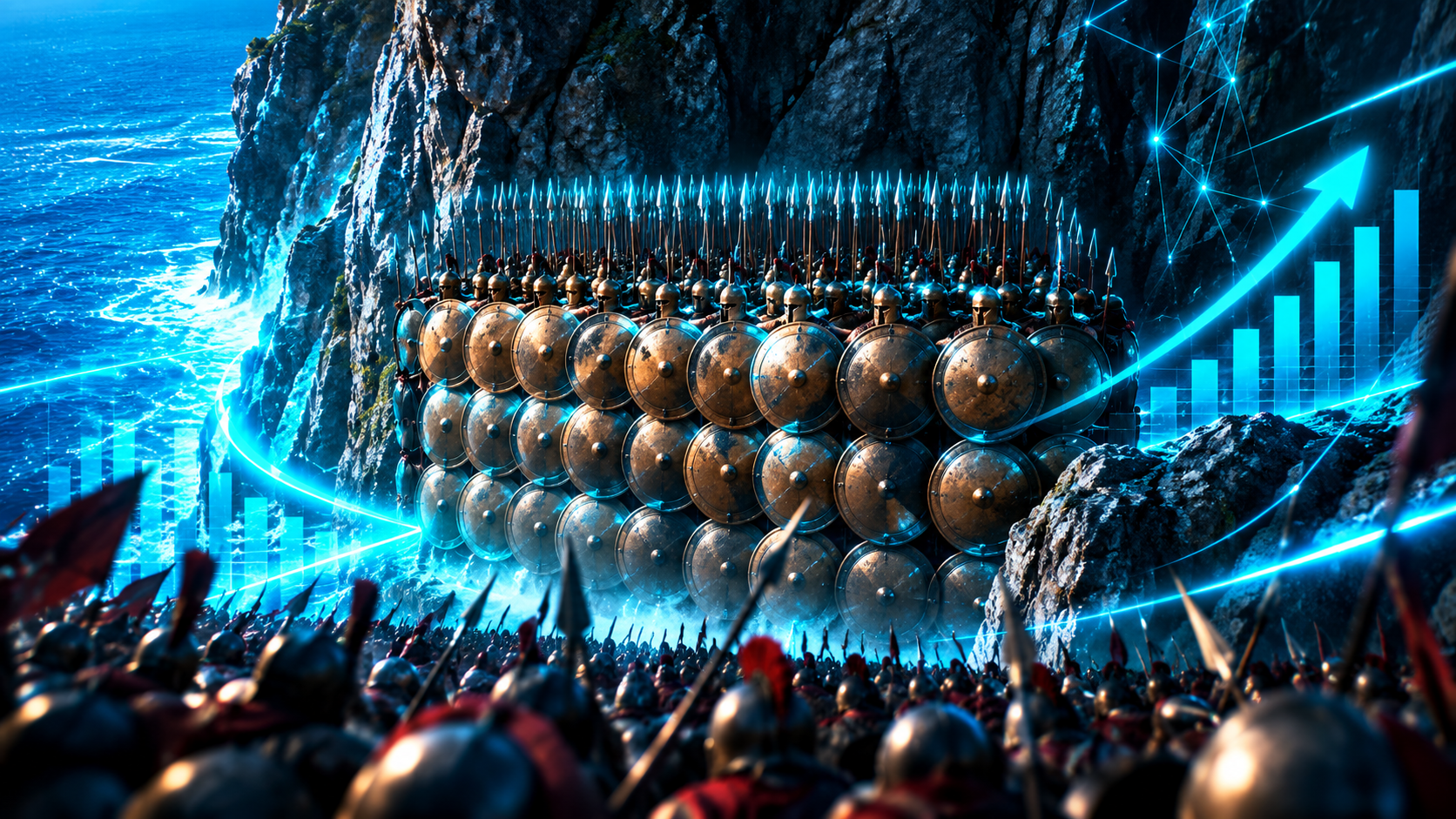
Sun Tzu wrote it down two thousand years earlier: put your soldiers on death ground, a position where there's no escape, and they will fight. Not because they're brave. Because the alternative is gone, and a man with no alternative is a very different man. The Spartans at Thermopylae are the version everyone knows. Three hundred in a narrow pass, the sea on one side, the cliff on the other, and nothing behind them worth running to. They held for three days against an army that should have walked through them in an hour.
Caesar crossing the Rubicon is the same story with a river instead of a beach. Once you've crossed, the question of whether to cross is over, and all your energy goes to what's next. That's the point. The decision is the expensive part. Once it's made, everything gets simpler.
This is an engineering problem
Here's where it stops being a history post and starts being about you.
I've written before that every business has thresholds, points where the old way stops working and the only move is the next step. And I've written that you should stop relying on discipline and engineer the consequence, because willpower is a terrible system and environment beats it every time.

Burning the boats is the same idea at the highest stakes. You don't get focus by wanting it. You get it by removing every option that isn't the thing. Cortés didn't give a motivational speech. He took away the ships. The focus followed, because it had nowhere else to go.
Every founder I know who actually made it has a version of this. They quit the job before the business could afford it. They signed the lease. They told everyone. They put their own money in where it would hurt. From the outside it looks reckless. From the inside it's the opposite: a deliberate decision to make retreat more expensive than pushing forward, so that on the bad days, and there are a lot of bad days, the math still says forward.
The people who keep a boat in the harbor usually end up on it. Not because they're weak. Because a way out is a thing you drift toward when you're tired, and you will be tired.
What I'm not saying
I'm not saying be stupid. Cortés scouted. He made allies. He had a plan for the city before he sank the ships. Burning the boats after you've done the work is commitment. Burning them before is just arson.
I'm also not saying every bet deserves this. Most don't. Most things you should try small, cheap, and reversible, and I've spent a lot of this blog telling you exactly that. But once in a while something is big enough and right enough that half-measures guarantee it fails. Those are the ones where you sink the ships.
The boats are burning
I'll be vague because I have to be, for a little while longer. But I'm on the beach right now. I've done the scouting. I like the plan. And I've made some decisions in the last few weeks that don't have a reverse gear.

There's news coming. Big, for me. When it lands you'll understand why this post exists. Until then, this is the mindset I'm operating in, and I figured you'd rather hear it now than after.
The takeaway
Do the work first. Scout. Make the plan. Then, when it's the real thing, remove the way out. Not as a stunt. As an engineering decision, because you know what you do when there's a boat in the harbor and you know what you do when there isn't.
The only way out is forward. That's not a slogan. On the right beach, it's a design choice.
Want help getting to your beach?
HyppoAI builds the systems that let a business run while its founder makes the big moves.